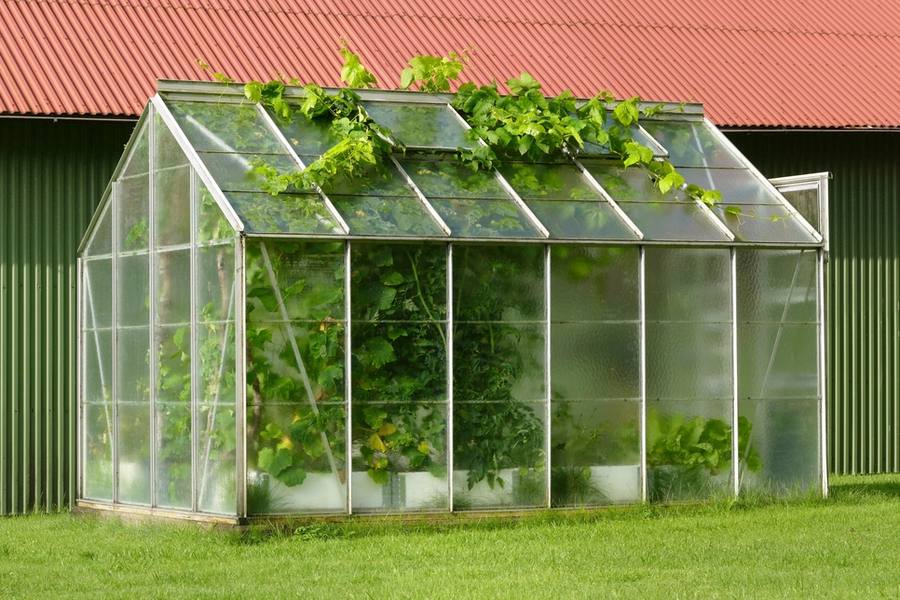
Image illustrative (photo de stock) ; ce n'est pas le produit exact.
It Doubles The Usable Space
A greenhouse floor holds one layer of pots and a greenhouse with staging holds two or three, which is the simplest way to increase capacity without a larger building.
Working at bench height also removes the constant bending that makes greenhouse work tiring, which for anybody with a bad back is decisive.
That combination of capacity and comfort is why almost every working greenhouse has staging, and why an empty one feels oddly unusable.
Slatted Or Solid Surfaces
Slatted staging lets water drain through and air circulate around pots, which reduces fungal problems and stops trays sitting in water.
Solid staging holds capillary matting or sand, which keeps pots evenly moist and makes watering far less frequent.
Mesh staging combines drainage with support for small pots that fall through wide slats, and most greenhouses end up with a mix.
Summer Removal Nobody Plans For
Staging is ideal in spring when a greenhouse is full of seed trays and in the way in summer when tomatoes and cucumbers need floor space and height.
Folding or removable staging handles that, and fixed staging means a greenhouse is committed to one use all year.
That seasonal cycle is the thing most people do not think about at purchase and discover in their first July.
Material And Corrosion
Aluminium staging never rusts and is light enough to move, which suits the damp environment of a greenhouse perfectly.
Steel rusts wherever the coating is damaged, and a greenhouse is about the worst possible environment for it.
Timber staging looks better and rots in permanent humidity, and it needs treating or replacing every few years.
Height, Width And Reach
Staging too deep means pots at the back cannot be reached without leaning across everything in front, which is how trays get knocked over.
Around sixty centimetres deep is reachable from one side, and anything deeper needs access from both.
Height should suit the person using it, and staging set at a standard height in a greenhouse used by somebody short or tall is uncomfortable throughout.
Under-bench space is genuinely useful and frequently wasted, since the area beneath staging is shaded and cool and suits overwintering dormant plants, storing pots and forcing rhubarb or chicory. Leaving it open rather than filling it with a lower shelf keeps that flexibility. A greenhouse where every surface is occupied by trays has no room left for the things that need to be stored rather than grown.
Load rating matters once staging holds wet trays and clay pots, which together weigh far more than the light plastic seed trays people picture when buying.
Shelf brackets fixed to the greenhouse frame use the wall space above staging for small pots and tools, adding capacity without taking any floor at all.
Hanging space above staging suits trailing plants and hanging baskets over winter, using the upper volume of a greenhouse that is otherwise entirely empty.
Modular systems that add sections let staging grow with a collection rather than being replaced, which for anything bought in a first season is worth checking.
The Verdict
Essential to making a greenhouse usable, where removable designs handle the seasonal change that fixed staging cannot.
Fixed staging blocks summer crops, steel rusts in humidity, and deep benches put pots out of reach.
Buy removable or folding staging. In July you will want the floor space back and fixed benching cannot give it.
En un coup d'œil
Avantages
- Doubles or triples usable growing space
- Bench height removes constant bending
- Aluminium never rusts in a damp greenhouse
- Capillary matting on solid tops cuts watering
Inconvénients
- Fixed staging blocks summer floor crops
- Steel rusts quickly in greenhouse humidity
- Timber rots in permanent damp
- Deep benches put back rows out of reach
Questions fréquemment posées
Do I need staging?
For spring seed raising, effectively yes — it doubles or triples the usable area and removes constant bending. An empty greenhouse feels oddly unusable because everything sits on the floor at one level.
Slatted or solid?
Slatted drains and circulates air, reducing fungal problems. Solid holds capillary matting, which keeps pots evenly moist and cuts watering considerably. Most working greenhouses end up with both.
Should it be fixed?
No — buy removable or folding. Staging is ideal in spring and in the way by July, when tomatoes and cucumbers need floor space and height. Fixed benching commits the greenhouse to one use all year.
Spécifications
| Type | Greenhouse staging and shelving |
| Main benefit | Multiplies usable growing area |
| Slatted | Drainage and air circulation |
| Solid | Capillary matting, less watering |
| Essential feature | Removable or folding for summer |
| Material | Aluminium over steel or timber |
| Depth | About 60 cm for one-sided access |
| Height | Matched to the person using it |
Résumé
Makes a greenhouse usable in spring and blocks it in summer. Buy the removable kind.
Vérifier le prix sur Amazon