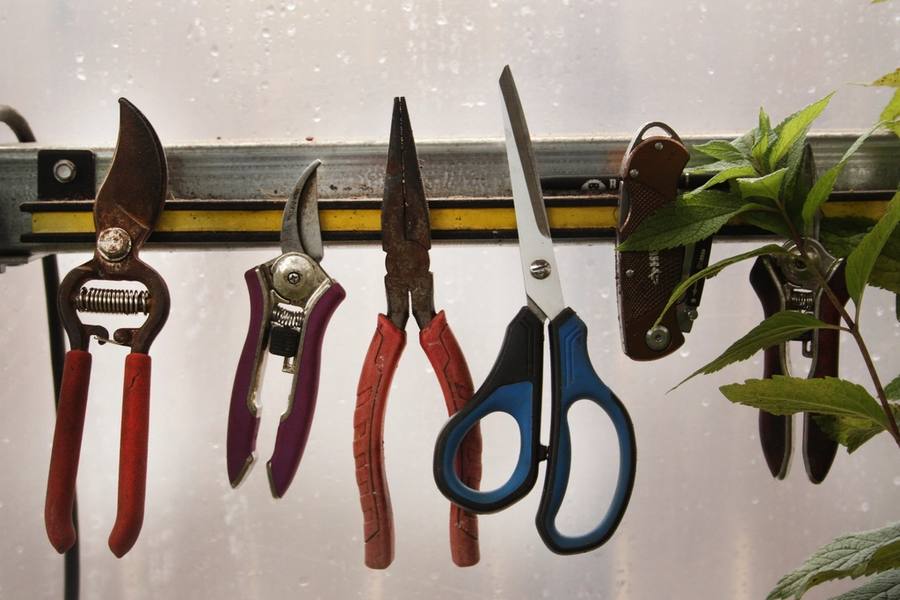
Image illustrative (photo de stock) ; ce n'est pas le produit exact.
Leverage Is The Entire Point
Loppers exist because a branch beyond secateur capacity needs force a one-handed tool cannot deliver, and handle length multiplies that force.
Longer handles give more leverage and more reach and are heavier and harder to control precisely in a crowded shrub.
Matching length to the work — long for tree branches overhead, shorter for shrub thinning — matters more than buying the longest available.
Geared And Ratchet Mechanisms
Geared or compound-action loppers multiply force through the mechanism rather than through handle length, which cuts thicker wood with the same effort.
Ratchet mechanisms cut in stages, closing progressively with repeated squeezes, which suits anybody with limited hand strength.
Both cost more than a plain pivot and deliver considerably more than a slightly longer handle does, which is the specification worth paying for.
Bypass Or Anvil, Again
Bypass loppers cut living wood cleanly and anvil loppers crush, and the same reasoning applies as with secateurs.
Anvil loppers cut dead wood with less effort and are the right choice for clearing deadwood from a shrub or tree.
Most gardens are served by a bypass pair, and anybody clearing a lot of dead material benefits from having both.
Capacity, Overreaching And Saws
Stated capacity assumes green wood, and dry seasoned wood of the same diameter is considerably harder and frequently beyond the tool.
Twisting loppers to finish a cut bends the blades exactly as it does with secateurs, and a branch that resists needs a pruning saw instead.
A folding pruning saw costs little and handles everything above lopper capacity far more easily than forcing a tool designed for less.
Working Overhead Safely
Cutting above head height means branches fall toward the person cutting, and eye protection is a sensible precaution rather than an excessive one.
Standing on a ladder while operating two-handed loppers is a poor combination, since both hands are occupied and balance depends on the branch being cut.
A pole pruner handles genuine height from the ground, and anything requiring a ladder and a chainsaw is work for somebody equipped for it.
Blade coatings on better loppers reduce the friction of sap and wet wood dragging against the steel, which makes a noticeable difference across many cuts. Those coatings wear off at the cutting edge with sharpening and remain on the flat faces where they do most of their work. Cleaning sap from blades with a solvent after a session preserves both the coating and the action considerably.
Handle material determines the weight you carry at arm length, and aluminium or carbon handles reduce fatigue substantially over steel on overhead work.
Telescopic handles adjust between reach and control on one tool, and the locking collars wear and eventually slip under load, which is the trade for the versatility.
Storage hanging by the handles keeps blades off a shed floor where damp corrodes them, and a light oil on the blades before winter prevents the pitting that ruins the cutting edge.
The Verdict
The right tool for the gap between secateurs and a saw, where a geared mechanism is worth more than extra length.
Dry wood exceeds stated capacity, twisting bends blades, and overhead work on a ladder is genuinely hazardous.
Pay for the gearing, not the length. A compound mechanism does far more than another foot of handle.
En un coup d'œil
Avantages
- Geared mechanisms cut thick wood with modest effort
- Ratchet versions suit limited hand strength
- Long handles reach into shrubs and overhead
- Replaceable blades on better models
Inconvénients
- Dry seasoned wood exceeds stated capacity
- Twisting to finish a cut bends the blades
- Long handles are heavy and imprecise
- Overhead work on a ladder is hazardous
Questions fréquemment posées
Longer handles or geared mechanism?
Geared. Compound action multiplies force through the mechanism and cuts thicker wood with the same effort, where extra length adds weight and reduces precision in a crowded shrub.
Why will they not cut this branch?
Stated capacity assumes green wood. Dry seasoned wood of the same diameter is considerably harder and frequently beyond the tool. Use a folding pruning saw rather than twisting, which bends the blades permanently.
Can I use them from a ladder?
Better not to. Both hands are occupied and your balance depends on the branch you are cutting. A pole pruner reaches genuine height from the ground, and anything needing a ladder and a chainsaw needs someone equipped for it.
Spécifications
| Type | Long handled bypass loppers |
| Principle | Leverage |
| Better than length | Geared or compound action |
| For weak hands | Ratchet mechanism |
| Bypass | Living wood |
| Anvil | Dead wood |
| Beyond capacity | Use a folding pruning saw |
| Overhead | Eye protection; avoid ladders |
Résumé
Fills the gap between secateurs and a saw. Buy the gearing rather than the length.
Vérifier le prix sur Amazon