Self-Propelled Petrol Mower
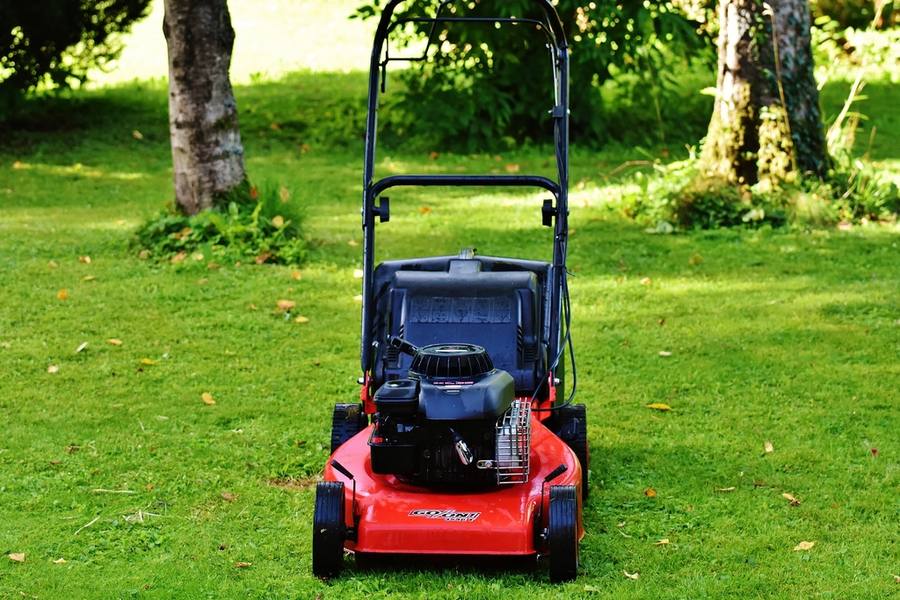
Symbolbild (Stockfoto); nicht das abgebildete Produkt.
Where Petrol Still Wins
Battery mowers have taken over small and medium lawns, and a large lawn, long grass or a significant slope still favours petrol on sustained power and unlimited runtime.
Self-propulsion matters most on slopes and with a heavy machine, where pushing a mower uphill repeatedly is genuinely hard work.
For anything under a few hundred square metres of flat lawn, petrol is now more machine than the job requires and brings maintenance a battery mower does not.
Fuel Goes Off And Ruins Carburettors
Petrol degrades within a few months and modern ethanol-blended fuel absorbs water, which is the single commonest cause of a mower that will not start in spring.
Draining the tank or running the carburettor dry before winter storage prevents it, and fuel stabiliser achieves the same for fuel left in place.
A carburettor gummed by stale fuel needs cleaning or replacing, which is a far larger job than the five minutes that would have prevented it.
Oil, Air Filters And Basic Service
Small engines need an annual oil change, a clean air filter and a new spark plug, and skipping those is what causes most mowers to be replaced prematurely.
That service costs very little in parts and takes under an hour, and it is the difference between a mower lasting five years and fifteen.
Running an engine on dirty oil or a blocked filter causes wear that cannot be reversed once it has happened.
Slopes, Direction And Safety
Mowing across a slope rather than up and down it is the standard guidance for walk-behind mowers, since a mower sliding backward down a slope can run over the operator's feet.
Blade contact injuries are severe and the blade continues spinning after the engine stops, which is why the brake bail must be released and the plug disconnected before any inspection.
Stones thrown by a rotary blade travel at considerable speed, and clearing a lawn of debris before mowing protects windows, cars and people nearby.
Noise, Fumes And Neighbours
Petrol mowers are loud enough to require hearing protection over an extended session, which is easy to dismiss and cumulative in effect.
Exhaust fumes are a reason never to run one in a garage or enclosed space even briefly, since carbon monoxide accumulates quickly.
Local noise restrictions on early morning and Sunday use exist in many areas, which is worth knowing before a first weekend with a new machine.
Four-stroke and two-stroke engines differ in ways that matter to an owner, since four-stroke engines take petrol and oil separately and two-stroke engines need them pre-mixed at a stated ratio. Putting straight petrol into a two-stroke engine destroys it within minutes through lack of lubrication, and it is a mistake made regularly. Almost all modern mowers are four-stroke, and confirming which is worth doing before the first fill rather than after.
Storage upright to save space is a common mistake, since tipping a mower the wrong way floods the air filter with oil and produces heavy smoke on the next start.
The Verdict
Still the correct tool for large or sloping lawns, with maintenance obligations that determine whether it lasts.
Stale fuel destroys carburettors, skipped servicing shortens life drastically, and blades cause severe injuries.
Drain the fuel before winter. Stale petrol gumming a carburettor is why most mowers fail to start in spring.
Auf einen Blick
Vorteile
- Sustained power for long or wet grass
- Unlimited runtime with a fuel can
- Self-propulsion makes slopes manageable
- Repairable and long-lived if serviced
Nachteile
- Stale fuel gums carburettors over winter
- Requires annual oil, filter and plug service
- Loud enough to need hearing protection
- Severe injury risk from the blade
Häufig gestellte Fragen
Petrol or battery?
Petrol for large lawns, long grass and significant slopes, where sustained power and unlimited runtime still win. For a few hundred square metres of flat lawn a battery mower does the job without the maintenance.
Why will it not start in spring?
Stale fuel, almost certainly. Petrol degrades within months and ethanol blends absorb water, gumming the carburettor. Drain the tank or run it dry before winter, or add stabiliser — five minutes that prevents a large job.
What safety matters most?
The blade keeps spinning after the engine stops, so disconnect the spark plug before any inspection. Mow across slopes rather than up and down, and clear stones first — a rotary blade throws them at real speed.
Spezifikationen
| Type | Self-propelled petrol rotary mower |
| Best for | Large lawns, long grass, slopes |
| Commonest failure | Stale fuel in the carburettor |
| Prevention | Drain or stabilise before storage |
| Annual service | Oil, air filter, spark plug |
| Slope technique | Mow across, not up and down |
| Before inspection | Disconnect the spark plug |
| Never | Run it in an enclosed space |
Fazit
Right for big or steep lawns. Drain the fuel before winter and do the annual service, or it dies young.
Preis auf Amazon prüfen